
At a Glance
- 1,500 sq ft, single story: $6,000 to $7,000
- 2,500 sq ft, two story: $10,000 to $12,000
- Roughly $4 to $5 per square foot
- Our prices are all in. The permit, the utility disconnects, and disposal are included
- Houston demolition permit: $127.56 for a single story, $174.56 for a two story
- What pushes the price up: slab foundations, brick walls, and tight lots
- Most single family teardowns in Texas do not need an asbestos survey
On this page
- How much does it cost to demolish a house in Houston?
- What our price covers, and what it does not
- What does a demolition permit cost in Houston?
- Do you need an asbestos survey to demolish a Houston home?
- What makes one teardown cost more than another
- How do you compare demolition quotes fairly?
- What to have ready before you call
- The short version
- Frequently asked questions
If you went looking for house demolition cost in Houston, you probably found a national average and a form to fill out. That is not much help when you are trying to work out whether a teardown makes sense for your lot.
Houston has its own permit fees. It has its own rule about disconnecting water and sewer before you can even apply for the demolition permit. Texas has its own asbestos rules, and they are not what most homeowners expect. None of that shows up in a national average.
So here are our real numbers, and what sits behind them.
What follows is what we actually quote for residential demolition in the Houston area, not an industry estimate.
How much does it cost to demolish a house in Houston?
House demolition in Houston costs roughly $4 to $5 per square foot. That works out to about $6,000 to $7,000 for a 1,500 square foot single story home, and $10,000 to $12,000 for a 2,500 square foot two story. Slab foundations, brick walls, and tight lots push jobs toward the high end.
Here is how those two sizes break down:
| Home size | Typical price | Per square foot |
|---|---|---|
| 1,500 sq ft, single story | $6,000 to $7,000 | $4.00 to $4.67 |
| 2,500 sq ft, two story | $10,000 to $12,000 | $4.00 to $4.80 |
For homes between those sizes, the per square foot figure is a fair guide. Very small structures and very large ones are worth a quick phone call, because the math stops being linear at both ends.
One thing worth saying plainly: these prices are all in. They include the permit, the utility disconnects, and hauling the debris away. A lot of quotes you will see do not.
What Our Price Covers, and What It Does Not
The gap between a $6,000 quote and a $6,000 final bill is whatever the first quote left out. So here is our full list.
| Item | In the price? | Note |
|---|---|---|
| City of Houston demolition permit | Yes | |
| Plumbing permit and licensed master plumber | Yes | Has to happen before the demo permit |
| Water and sewer disconnects | Yes | |
| Electric and gas disconnect coordination | Yes | |
| Machine time on site | Yes | |
| Loading and hauling | Yes | |
| Disposal and landfill fees | Yes | |
| Backfill and rough grading of the lot | Yes | |
| Asbestos abatement | No | Only if a survey finds it. More below |
| Large tree removal | No | Shrubs and small growth are included |
| Swimming pool removal | No | Priced as its own scope of work |
| Buried tanks or contaminated soil | No | Priced if and when we find it |
None of that is hidden. We would rather tell you about it during the walkthrough than after.
What does a demolition permit cost in Houston?
A residential demolition permit from the City of Houston costs $94.00 for the first story, plus $47.00 for each additional story, plus a $33.56 administrative fee. The Houston Permitting Center issues these in about one business day.
| Charge | Amount |
|---|---|
| First story | $94.00 |
| Each additional story | $47.00 |
| Administrative fee | $33.56 |
| Single story house, total | $127.56 |
| Two story house, total | $174.56 |
The permit is good for 180 days once issued, which is far more time than any house needs.
The fee is small. The paperwork sequence is where projects stall.
The plumbing permit that has to come first
Before you can even apply for the demolition permit, the water and sewer have to be capped. That work needs a master plumber who is licensed by the State of Texas and registered with the City of Houston. He pulls his own plumbing permit, does the disconnect, and passes inspection. Only then will the city process your demolition application. It wants proof that the sewer disconnect permit was purchased and finalized first.
This catches people out constantly. Homeowners apply for the demolition permit first, get turned back, and lose a week finding a plumber.
We handle that step for you, and the cost of it is already inside the prices above.
You will also need to arrange for electric and gas to be cut at the meter before anything comes down. We coordinate that as part of the job.
Do you need an asbestos survey to demolish a Houston home?
Usually not, if it is a single family home you own. Texas follows the federal standard here. The Texas Department of State Health Services states plainly that one private residence is not subject to the asbestos NESHAP regulations, and that notification is not required. Most house teardowns in Houston fall into that category.
That surprises people, because most cost guides tell homeowners to budget for an asbestos survey no matter what. For a straightforward single family teardown in Texas, that is often money you do not need to spend.
The City of Houston asks for an asbestos survey with your permit application only “if applicable,” which lines up with the same rule.
When the exemption does not apply
The exemption is narrow. You still need a survey, and the state still needs notifying, when:
- The building is a duplex, apartment building, or any other multifamily property
- The building is commercial, industrial, or institutional
- Your project covers more than one structure, or the house is part of a larger development
- The structure is a public building under state rules
In those cases the Texas Department of State Health Services must be notified at least 10 working days before demolition starts. Not ten calendar days. Working days, which usually means two full weeks on a calendar.
Here is the part people miss: that notification is required even when the survey comes back clean and no asbestos is present.
What if asbestos does turn up
Sometimes it does, usually in an older home. Common places are floor tile and the black adhesive under it, popcorn ceilings, pipe wrap, and old siding. If a survey finds it, the material has to be removed by a licensed crew before the house comes down. It also has to be disposed of separately, with paperwork.
That adds both cost and time. How much of each depends on how much material there is and where it sits. We will give you a number once we know what the survey says, rather than padding the original quote to cover a maybe.
If your project does need asbestos survey and abatement work, we will tell you at the walkthrough and get it scheduled so it does not hold up the teardown. Our owner, Juan Ponce, holds a Texas asbestos abatement supervisor license issued by the Department of State Health Services, so this is not something we guess at.
What Makes One Teardown Cost More Than Another
Two houses the same size on the same street can quote differently. Three things move the number most.
Slab foundations cost more than pier and beam. This is the one most homeowners get backwards. A pier and beam house sits on blocks, and once the structure is down the foundation comes out in pieces. A concrete slab has to be broken up, loaded, and hauled, and concrete is heavy. That weight shows up in both machine time and disposal.
Brick costs more than siding. Brick and masonry take longer to bring down and produce heavier debris than a wood frame house with siding or stucco. Same footprint, more tonnage.
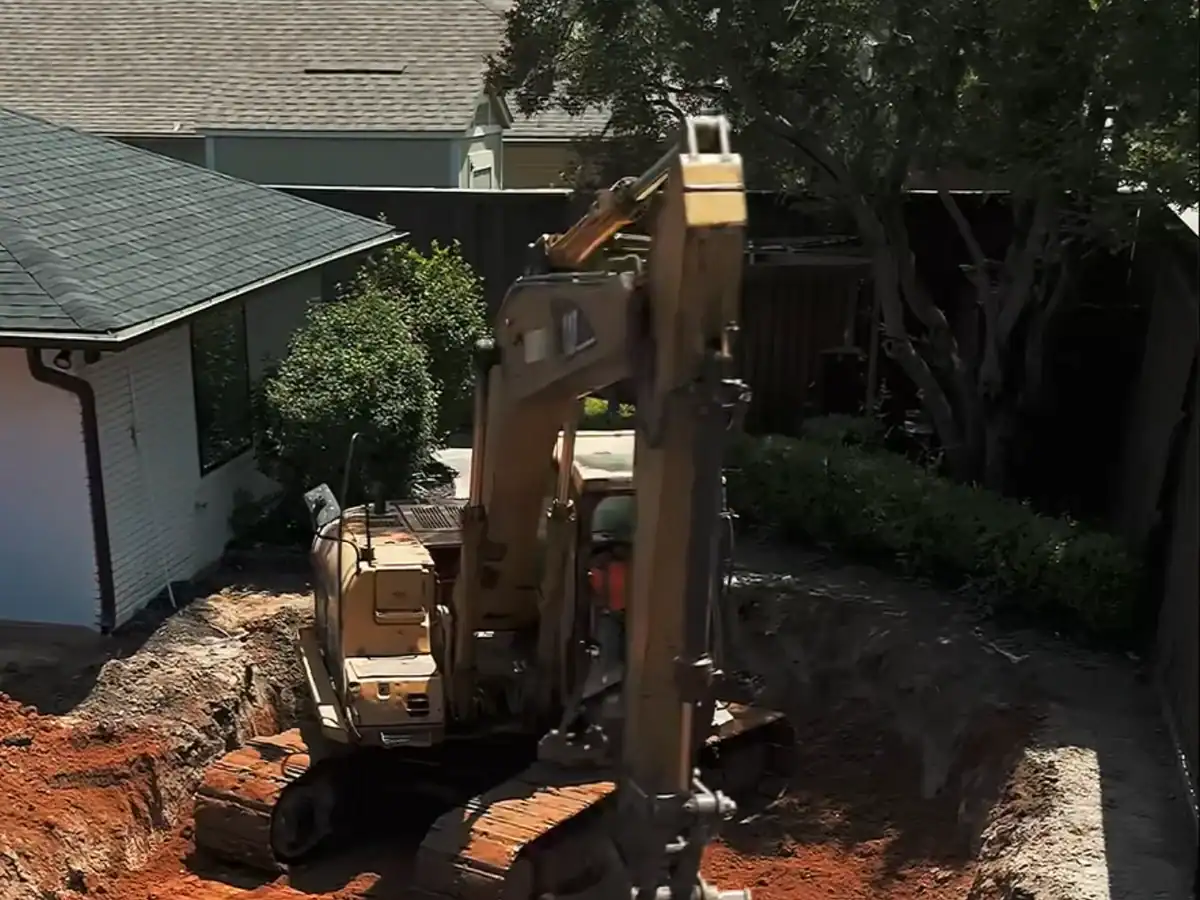
Tight lots cost more than open ones. If the house sits close to a neighbor, a fence line, a garage, or power lines, we slow down and use smaller equipment. Inside the Loop especially, we often cannot swing an excavator where we would like to. Careful work takes longer. Longer costs more.
A few other things that can move the price:
- Trees or landscaping that have to come out first
- Driveways, patios, and slabs beyond the house footprint
- Narrow street access for the haul trucks
- Long haul distance to the right disposal site
- Wet weather, since Houston clay does not take equipment well after heavy rain
Which of these apply depends a lot on where the property sits. Requirements and access vary across the Houston area suburbs we serve.
How do you compare demolition quotes fairly?
Put the quotes side by side. Check whether each one includes the permit, the plumbing permit and sewer disconnect, hauling, disposal fees, and backfill. A quote that leaves those out will always look cheaper. It is not cheaper. Those costs just arrive later, as separate bills.
When you are reviewing bids, ask each contractor these five questions:
- Does this include the permit, or do I pull it? If you pull it, you also arrange the master plumber.
- Does this include disposal, or is dumping billed separately? Disposal is a real share of any demolition bill.
- What happens to the hole? Backfill and rough grading should be in the price. Walking away from an open foundation is not finishing the job.
- What is your general liability coverage? Ours is $2 million. Ask for the certificate, and actually read it.
- What is not included? Any contractor who cannot answer this quickly has not thought about your project.
The cheapest bid is usually the one missing a line item. That is worth remembering before you sign anything.
What to Have Ready Before You Call
You will get a faster and tighter number if you know a few things up front. None of it is complicated.
- Square footage, even roughly. This is the single biggest driver.
- Foundation type. Slab or pier and beam. If you are not sure, we can tell from the walkthrough.
- Exterior material. Brick, siding, stucco, or a mix.
- Roughly when it was built. This tells us whether asbestos is worth thinking about.
- What else is on the lot. Detached garage, shed, pool, driveway, large trees.
- Access. Can a truck and trailer get down the street and onto the property?
Photos help more than you would think. A few shots of the front, the back, and the street are often enough for us to give you a realistic ballpark before we ever drive out.
The Short Version
A typical Houston house teardown costs $6,000 to $7,000 for 1,500 square feet on one story, or $10,000 to $12,000 for 2,500 square feet on two. Call it $4 to $5 per square foot as a working figure.
The permit is cheap at roughly $128 to $175. The sequence around it, particularly the master plumber and the sewer disconnect, is what slows projects down.
And if it is your own single family home, you very likely do not need the asbestos survey that most cost guides insist on.
Every lot is different, so the only number that really matters is the one for your property. We will walk your site, look at the foundation and the access, and give you a written price with nothing hidden in it. Request a free on site estimate, or call us at 281-999-9935.
Frequently Asked Questions
What is house demolition cost per square foot in Houston?
About $4 to $5 per square foot for a standard residential teardown, with the permit, the utility disconnects, and disposal included in that figure. Concrete slab foundations and brick exteriors sit at the upper end, because both produce heavier debris than a pier and beam wood frame house of the same size. Very small structures tend to run higher per square foot than the range suggests, since the permit, the master plumber, and moving equipment to the site cost the same whether the house is 900 square feet or 1,900.
How long does it take to demolish a house in Houston?
Plan for the paperwork, not the machines. The demolition permit itself is issued in about one business day, but the plumbing permit, the sewer disconnect, and its inspection have to be completed first, and utility shutoffs take their own scheduling. The teardown and cleanup are a matter of days once everything is approved. Ask us for a timeline on your specific property.
Does homeowners insurance cover demolition?
Usually not for a voluntary teardown. Insurance is more likely to come into play when a home is damaged by fire, storm, or flood and demolition is part of the claim. Policies vary a great deal, so talk to your adjuster before assuming either way, and get any coverage confirmed in writing.
Can I demolish my own house in Houston?
You still need the permit and you still need a master plumber. The City of Houston requires that the water and sewer disconnect be done under a plumbing permit by a plumber licensed by the state and registered with the city, with an inspection signed off, before the demolition permit is processed. Most homeowners find hiring a demolition contractor simpler than managing that sequence themselves.
What happens to the debris from a house demolition?
It gets loaded, hauled, and disposed of properly, and that cost is included in our pricing. Concrete, metal, and wood are separated where it makes sense to do so. Anything regulated, such as asbestos containing material, has to be handled and documented separately under state rules.
Is it cheaper to demolish and rebuild, or to remodel?
It depends on how much of the existing structure you actually want to keep. If the foundation and framing are sound and you are changing layout and finishes, interior demolition is usually the cheaper route. If the structure has serious foundation problems, storm or flood damage, or you want a fundamentally different house on the lot, a full teardown often costs less than fighting the old building. We are happy to look and tell you honestly which way we would go.